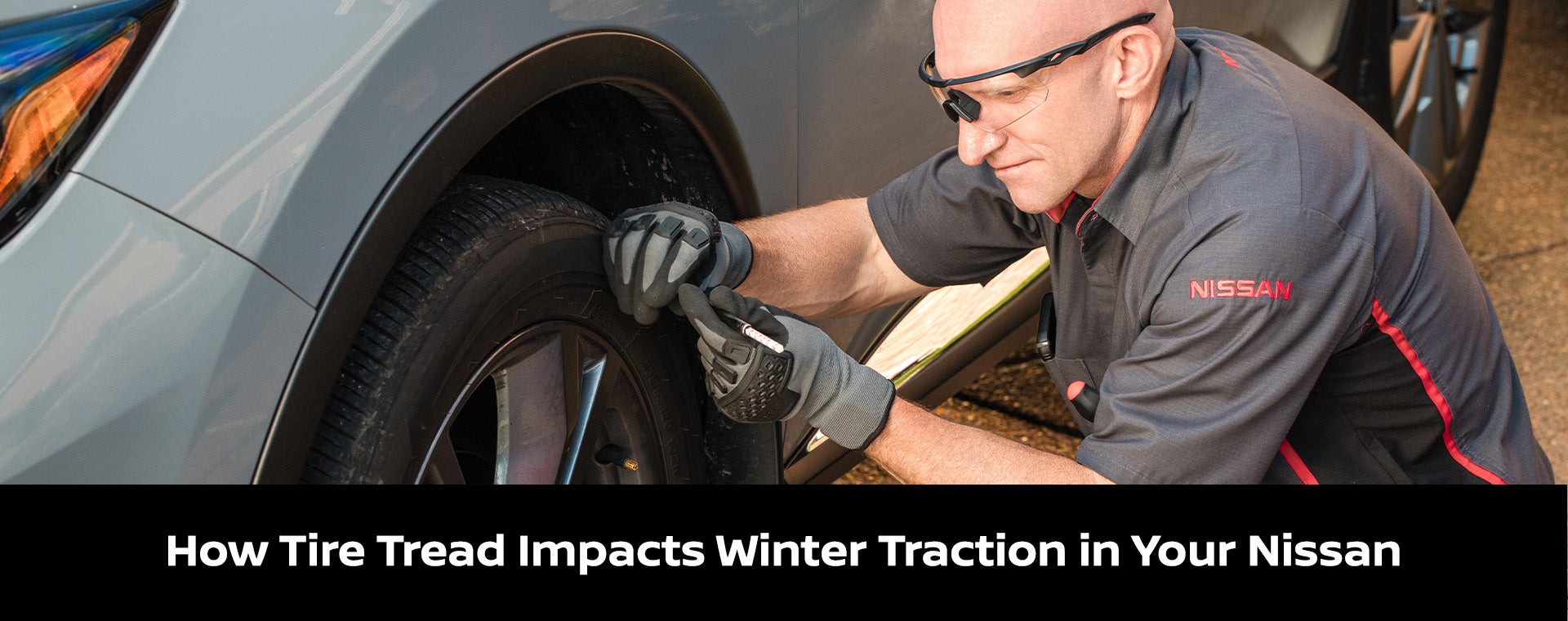
November in Frederick has a way of making ordinary drives a little less predictable. One morning you’re heading down Route 15 on dry pavement. The next, temperatures have dropped overnight, the windshield needs scraping, and the road looks suspiciously shiny near an intersection. It’s a good reminder that winter traction starts with your tires, and not just whether they’re labeled all-season or winter. The amount of tread left on your Nissan’s tires can make a noticeable difference in how well they handle rain, slush, snow and other slippery conditions. For drivers around Frederick, Urbana, Walkersville and Mount Airy, checking tire tread depth before winter arrives is one of the simplest ways to prepare for colder weather. Why Tire Tread Depth Matters More When Roads Get Slippery Tire tread isn’t just the pattern you see on the surface of a tire. Those grooves have a job to do. On wet pavement, they help move water away from the area where the tire meets the road. In snow, tread patterns and small cuts called sipes help create additional gripping edges. As tires wear down, those grooves become shallower, leaving less room to channel water and slush. That can make it easier for a tire to lose contact with the road, especially when you’re driving through standing water. It can also reduce traction when accelerating, turning or braking on snow-covered pavement. And here’s the important part: a tire doesn’t have to look completely bald to lose a meaningful amount of winter traction. That’s why tread depth deserves attention before Frederick sees its first significant snowfall, not just when the tires are visibly worn out. Is 2/32-Inch Tire Tread Enough for Winter Driving? In many states, including Maryland, 2/32 of an inch is the commonly recognized minimum tread depth for passenger tires. But reaching that minimum doesn’t mean a tire is well-equipped for winter conditions. By the time the tread gets that shallow, much of the tire’s ability to move water and slush away from the contact patch has already been reduced. A useful way to think about tread depth is: 6/32 inch or more: Generally offers more remaining tread for managing wet and snowy conditions, although tire design and condition still matter. 4/32 inch: A good point to seriously evaluate tire replacement before winter, especially if you regularly drive in rain or snow. 2/32 inch: At or near the legal minimum in many jurisdictions and not a comfortable margin for challenging winter roads. You can use a tread-depth gauge for a more accurate measurement, or ask a technician to inspect your tires during a service visit. The familiar penny test can help identify very shallow tread, but it doesn’t tell the whole story about whether your tires are ready for winter. Does All-Wheel Drive Help if Your Nissan’s Tires Are Worn? Available all-wheel drive is a great feature to have when the weather changes. Nissan SUVs like the Rogue and Pathfinder offer AWD systems designed to help distribute power when additional traction is needed. But there’s one important limitation: AWD doesn’t restore grip to worn tires. All-wheel drive can help your Nissan accelerate on slippery pavement, but braking and steering still depend heavily on the traction between your tires and the road. That means a Nissan Rogue with AWD and worn tires can still struggle to stop on an icy road. And a front-wheel-drive Nissan Sentra with healthy, appropriate tires may have better braking traction than you’d expect. Whether you’re driving a newer Nissan Rogue, Sentra, Frontier or a pre-owned Nissan Altima, maintaining proper tire tread is essential regardless of drivetrain. Cold Weather Can Change Your Tire Pressure, Too Tread depth isn’t the only thing to check as temperatures fall. Tire pressure typically drops by about one PSI for every 10°F decrease in temperature, which means a properly inflated tire in September may need attention by November. Underinflated tires can affect handling, fuel efficiency and tread wear. Over time, uneven wear may leave some areas of the tire with less usable tread than others. Before winter driving becomes part of your daily routine, check your tire pressure when the tires are cold and compare it with the recommendation on your Nissan’s driver-side door-jamb label. It’s also worth looking for uneven tread wear, sidewall damage and any unusual vibration or pulling while driving. Those issues may indicate that your tires need more than a simple pressure adjustment. Get Your Nissan Tires Checked Before Winter at Younger Nissan of Frederick You don’t need to wait for snow to find out whether your tires are ready for winter. A tread-depth measurement, pressure check and visual inspection can tell you a lot about how prepared your Nissan is for the months ahead. At Younger Nissan of Frederick, our team can help you evaluate your current tires and explore replacement options through our Nissan Tire Center. Whether you’re driving a Nissan Rogue, Sentra, Frontier, Altima or another Nissan model, we’ll help you understand what your vehicle needs. Explore our available services, check our Service & Parts Specials, or use our Schedule Service Appointment tool to plan a visit before winter weather arrives. Find us at 7418 Grove Road in Frederick, MD, proudly serving Nissan drivers throughout Frederick, Urbana, Walkersville, Mount Airy and surrounding communities. A few minutes spent checking your tire tread now could make a meaningful difference the next time the forecast changes.